
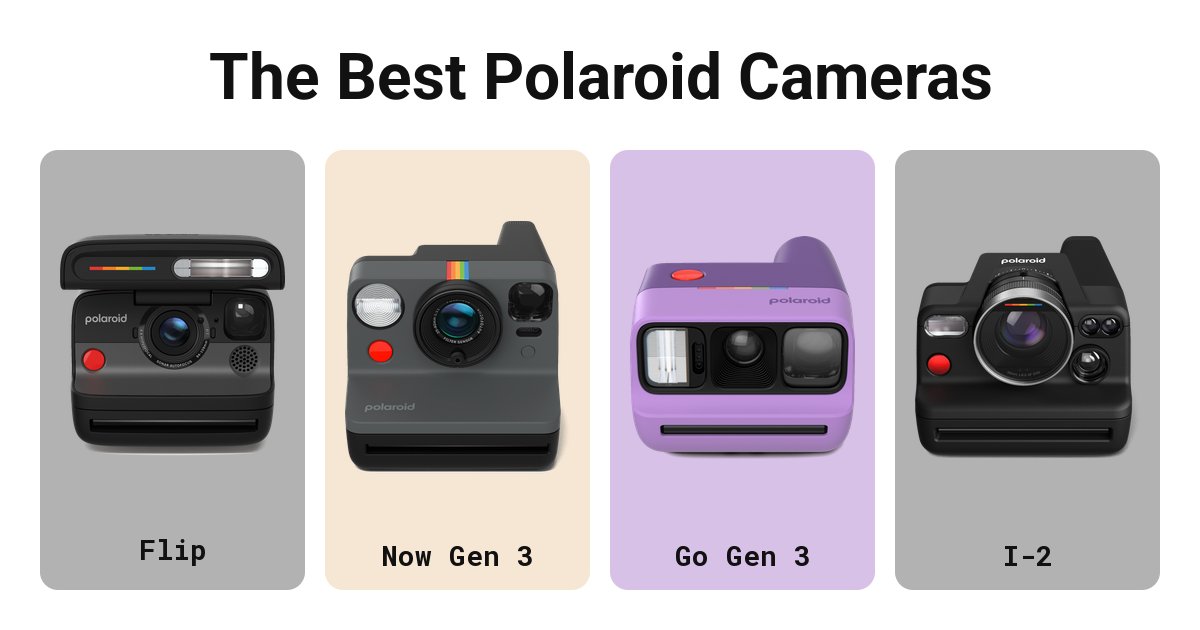
The Polaroid Flip is the best Polaroid camera for most people. Here is every current Polaroid ranked, from the $82 Go Gen 3 to the $599.99 I-2.
This list covers cameras sold under the Polaroid name. Plenty of people say “Polaroid” for any instant camera; if that is you, our best instant camera guide covers Instax and the rest. Every camera below takes Polaroid’s own film, and the film is where most of your money goes.
Best overall: Polaroid Flip
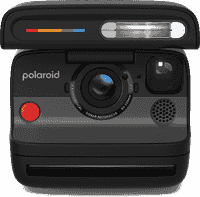
Polaroid FlipBest overall
Street price: $210.00 (list $199.99)
Amazon rating: 4.7 out of 5 (8 ratings)
Pros
- sonar autofocus produces sharp shots without effort
- the flip-up lid protects the lens and switches the camera off
- exposure compensation, self-timer and double exposure work without a phone
Cons
- film cost, about $2.37 a shot
- no lens filters or external flash support
- cannot focus close enough for a frame-filling selfie
The Flip is the Polaroid to buy if you want more of your pictures to come out. Every full-size Polaroid here shoots the same i-Type film at $2.37 a shot, so the camera that wastes fewer frames earns back part of its price. The Flip picks between four sonar focus zones, from 0.4 m out to infinity, where the Now picks between two. A viewfinder LED warns you of over- or underexposure before you press the shutter, and the flash sets its power by the subject’s distance, out to 4.5 m.
The body carries plus or minus 1 EV of exposure compensation as well as the self-timer and double exposure. All three sit on one unmarked bar on the back, and you will need the paper guide to learn which press does what. The app adds full manual control and a bulb mode of up to 99 hours. Jim Fisher gave it PCMag’s Editors’ Choice for i-Type cameras. Dan Finnen called it the best i-Type camera Polaroid has made, though he found the build cheap in places.
What you give up is size and close focus. It weighs 648 g, it will not focus closer than 0.4 m, so frame-filling selfies are out, and the flash turns itself back on every time you open the lid. The sonar also focuses on glass, so you cannot shoot through a window.
It was $210 on October 5, 2026, $80 more than the Now Generation 3. That gap is about 34 shots of i-Type film. The camera-only Amazon listing has just 8 ratings, too few to mean much; Polaroid’s Flip and film bundle sits at 4.1 from 218. The full head-to-head is in Polaroid Flip vs Polaroid Now.
Best value full-size Polaroid: Polaroid Now Generation 3
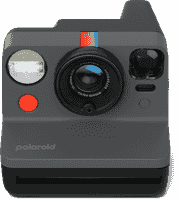
Polaroid Now Generation 3Best value full-size Polaroid
Street price: $129.99 (list $119.99)
Amazon rating: 4.3 out of 5 (540 ratings)
Pros
- simple point-and-shoot operation
- the classic Polaroid look and full-size prints
- solid build and good colour choices
Cons
- film cost, eight shots a pack
- exposure and sharpness can disappoint indoors and in mixed light
- expensive for what buyers call a novelty
The Now Generation 3 is the plain, one-button Polaroid most people picture. It makes the same 107 x 88 mm print as the Flip for $129.99, and it has a self-timer, double exposure and a tripod socket. It takes i-Type and 600 film, charges over USB-C and lasts about 120 shots a charge. It weighs 448 g and comes in seven colors. Amazon buyers rate it 4.3 from 540 ratings, and what they like most is how little there is to learn.
The trade is focus. The Now chooses between two zones, 0.40 to 1.3 m and 1.0 m to infinity, and you half-press the shutter to set it. PCMag’s Jim Fisher scored it 3.0 and said the basic autofocus misses too often to justify the cost per use. Indoors and in mixed light is where a minority of buyers report flat, badly exposed pictures.
There is no Bluetooth and no app control. Polaroid support documents a three-step exposure compensation reached by holding the flash button, though PCMag’s reviewer treated the Generation 3 as having no on-body exposure control at all. The battery is sealed in, and there is no selfie mirror.
Buy it as a first Polaroid, a party camera or a gift. If you expect to shoot more than a few packs, the Flip’s four focus zones are worth the extra $80. We compare the Now with its siblings in Polaroid Now vs Now+, Polaroid Now Gen 2 vs Gen 3 and Polaroid Go vs Polaroid Now.
Best small and cheapest to run: Polaroid Go Generation 3
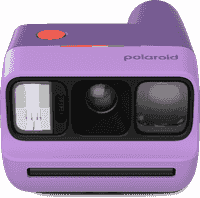
Polaroid Go Generation 3Best small and cheapest to run
Street price: $82.00 (list $89.99)
Amazon rating: 3.8 out of 5 (224 ratings)
Pros
- genuinely pocket-sized
- Go film is much cheaper per shot than i-Type
- selfie mirror and stronger flash make selfies work
Cons
- prints blow out in bright sunlight
- flash turns itself back on for every shot
- no tripod thread despite having a self-timer
The Go is the Polaroid you will actually carry. It measures 106.5 x 83.8 x 64.6 mm and weighs 252 g, a little over half the weight of the Now. It has a selfie mirror, which none of the full-size Polaroids here has, plus a self-timer and double exposure. It was $82 on October 5, 2026, below its $89.99 list price.
The bigger saving is the film. Go film costs $1.36 a shot against $2.37 for i-Type, so 100 shots come to about $136 instead of $237. That is the per-shot price times 100, since film is sold by the pack. No other Polaroid film is cheaper. You pay for it in print size: 66.6 x 53.9 mm with a 47 x 46 mm image, against a 79 x 77 mm image on i-Type. Go film fits only the Go.
Exposure is the weak spot. The camera picks between two apertures, f/14.4 and f/32, focus is fixed, and the flash turns itself back on before every frame. TechRadar’s Jon Stapley scored it 4.0 but warned that bright sun can overexpose images to near-oblivion. Digital Camera World’s James Artaius called it Polaroid’s best miniature camera yet, crediting the longer 63.75 mm lens and better exposure.
Amazon buyers are cooler on it: 3.8 from 224 ratings, below the 4.2 the discontinued Go Generation 2 holds. There is no tripod socket, because the whole base of the camera is the film door. See Polaroid Go vs Polaroid Now for the size trade-off and Polaroid Go vs Instax Mini 12 if you are open to Instax.
Best for app-controlled creative modes: Polaroid Now+ Generation 3
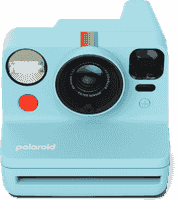
Polaroid Now+ Generation 3Best for app-controlled creative modes
Street price: $149.99 (list $139.99)
Amazon rating: 4.2 out of 5 (251 ratings)
Pros
- easy to hand round at weddings and parties
- sturdy, good-looking body
- prints look like the Polaroids people remember
Cons
- prints come out dark indoors, even with flash
- exposure and dynamic range are worse than Instax
- film cost
The Now+ is the Now Generation 3 body with Bluetooth added. The blue button on the front is the only visible difference. Through the Polaroid app you get manual mode, aperture priority, finer exposure compensation, light painting, a portrait mode, a tripod mode and a remote trigger. Amazon’s spec sheet lists exposures of up to 30 seconds in app mode. With the tripod socket, that makes long exposures and group shots from a stand practical.
It was $149.99 on October 5, 2026, $20 more than the Now. Amazon buyers rate it 4.2 from 251 ratings. Their most common complaint is underexposed indoor shots, with a flash that several buyers say does little. It shares the Now’s two-zone autofocus, and PCMag’s 3.0 score covers both: Jim Fisher reviewed the Now+ and noted the Now is the same body without Bluetooth.
Every exposure change needs the phone, which slows down candid shooting. If you want control without opening an app, the Flip puts compensation, the self-timer and double exposure on the body and still offers full manual through the app, for about $60 more. Reviewers of the Now+ point buyers to the Flip again and again.
Buy the Now+ if you want to experiment with light painting and double exposures and do not mind stopping to set them up. In Polaroid Now vs Now+ we pick the plain Now unless you will really use the app, and in Polaroid Flip vs Polaroid Now the Flip beats both.
Best for manual control: Polaroid I-2
Pros
- the sharpest lens Polaroid has made
- real aperture and shutter dials on the camera itself
- large, bright viewfinder with an integrated readout
Cons
- price
- auto mode overexposes
- no manual focus and no macro
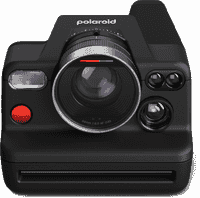
The I-2 is the only current Polaroid with aperture priority, shutter priority and full manual exposure on the body itself. It has Polaroid’s sharpest lens, a three-element 98 mm glass and plastic design with a 49 mm filter thread. Focus is continuous autofocus driven by a LiDAR rangefinder. Shutter speeds run from 1/250 to 30 s, plus a bulb mode of up to 99 hours, and it works with external flash units. It is also the only current Polaroid that takes SX-70 film as well as i-Type and 600.
The price is the problem. Polaroid lists it at $599.99, $470 more than a Now Generation 3. On October 5, 2026 there was no standalone Amazon listing, only a camera-and-film bundle showing no price and 3.8 from 22 ratings, too few to read much into.
Reviewers split hard. Digital Camera World’s James Artaius gave it 5 out of 5 and called it Polaroid’s finest camera ever. Dan Finnen could not recommend it, arguing that a 600 dollar camera cannot compete with a decades-old one under 100 dollars. He named overexposure in auto mode and the sealed battery as the deal-breakers. There is no manual focus and no macro, and framing is through a separate viewfinder, not the lens.
Buy it if you already know you want to set exposure yourself on Polaroid film, or you want to use filters. For everyone else, the Flip offers manual control through its app for about a third of the price. Which film suits which camera is covered in Polaroid i-Type vs 600 film.
Best older model: Polaroid Now Generation 2
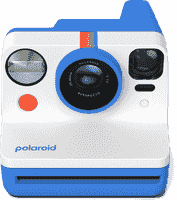
Polaroid Now Generation 2Best older modelDiscontinued
Street price: $99.88
Amazon rating: 4.3 out of 5 (1,393 ratings)
Pros
- simple point-and-shoot operation with nothing to learn
- solid, chunky, nostalgic build
- USB-C rechargeable battery
Cons
- film costs about $2.37 a shot at the regular i-Type price
- images are not sharp corner to corner
- replaced by the Gen 3, which focuses and meters better
Polaroid discontinued the Now Generation 2 in 2026, and the Generation 3 replaced it. Third-party sellers on Amazon still had new stock, though: $99.88 on October 5, 2026, about $30 less than the Gen 3. That gap pays for about 13 shots of i-Type film. It also has more Amazon ratings than any other camera on this list, 4.3 from 1,393.
It works like the Gen 3. You get two-zone autofocus, a self-timer, double exposure, USB-C charging good for about 120 shots, and i-Type or 600 film. Polaroid support documents the same three-step exposure compensation through the flash button. Reviewers note soft corners and muted color, and the Gen 3 focuses and meters better. Digital Camera World’s James Artaius, reviewing the same body in Now+ form, scored it 5 and called it still one of the very best instant cameras you can buy.
Old stock lingers on Amazon, which makes generation labels on shop listings unreliable, so check which model you are getting before you pay. The price is also the whole case for it: if it creeps toward the Gen 3’s, buy the Gen 3.
The first-generation Now, also discontinued, was $89 on Amazon, cheaper still. It charges over micro-USB and has no tripod socket. Our Polaroid Now Gen 2 vs Gen 3 comparison has the details on the two later models.
Polaroid film types: i-Type, 600, SX-70 and Go
Polaroid makes four films for its current cameras, and the camera decides which ones you can use.
| Film | Current cameras it fits | Pack price | Per shot |
|---|---|---|---|
| i-Type | Flip, Now, Now+, I-2 | $18.99 for 8 | $2.37 |
| 600 | Flip, Now, Now+, I-2, plus vintage 600 cameras | $20.00 for 8 | $2.50 |
| SX-70 | I-2, plus vintage SX-70 cameras | $21.99 for 8 | $2.75 |
| Go | Go only | $21.79 for 16 | $1.36 |
The i-Type price was checked on Amazon on October 5, 2026; it was on a temporary sale that day, and we use the regular price. The 600 and Go prices were checked on Amazon on September 10, 2026, and SX-70 at B&H on the same day.
i-Type, 600 and SX-70 all print 107 x 88 mm with a 79 x 77 mm image. The difference is the battery. A 600 or SX-70 pack carries a battery to power a vintage camera, and an i-Type pack does not, which is why i-Type will not work in a vintage camera. Any modern Polaroid has its own battery, so i-Type is the cheaper choice for it by 13 cents a shot. SX-70 film is rated ISO 160 against 640 for the other two, so it needs much more light. Go film is the small format, 66.6 x 53.9 mm, and fits nothing but the Go.
The full breakdown is in Polaroid i-Type vs 600 film.
Is a vintage Polaroid a better buy?
For some photographers, yes. Dan Finnen, who reviewed both the Now+ Generation 3 and the I-2, says an avid photographer will get far more from a vintage camera such as the Impulse AF. His guide to buying used Polaroids says that when in doubt, cheap box-type 600 cameras are usually the way to go for most people.
The case against is condition and convenience. Buying used is a gamble, with no warranty. The common 600 box cameras have soft plastic lenses, a flash you usually cannot switch off, and no self-timer or tripod socket on most models. Because they draw power from the film pack, they need 600 film at $2.50 a shot rather than i-Type.
A folding SX-70 has the best optics Polaroid ever built and folds flat. But it has no built-in flash, its ISO 160 film needs sun or a flash unit, the bellows are fragile, and SX-70 is the film most often out of stock. Retrospekt, Brooklyn Film Camera and MiNT sell serviced bodies if you would rather not gamble. We do not track vintage prices, so compare a few sellers.
Polaroid or Instax?
Choose Polaroid for the print and Instax for the running cost. A full-size Polaroid image is 79 x 77 mm inside a 107 x 88 mm frame, against 62 x 46 mm on an 86 x 54 mm Instax Mini print. Instax Mini film was $0.91 a shot at the October check, against $2.37 for i-Type, so 100 shots cost about $91 instead of $237. If you want a big print for less, Instax Wide film gives a 62 x 99 mm image, close to the Polaroid’s area, at $1.40 a shot.
Our Instax vs Polaroid comparison goes through the formats in detail, and the best instant camera guide ranks both brands together. If cheap prints matter more than real film, Kodak vs Polaroid covers the paper-printing cameras.
How we chose
We have not tested most of these cameras in person yet. The picks come from each camera’s published specs, prices and Amazon ratings checked on October 5, 2026, and from named professional reviews, including PCMag, TechRadar, Digital Camera World and Dan Finnen. Our method is on the How We Test page.
Because every full-size Polaroid uses the same film, we ranked first on how reliably a camera turns that film into keepers, then on price. That is why the Flip leads. We did not make the I-2 the top pick despite its lens: it costs $599.99, reviewers disagree sharply about it, and its only Amazon listing has 22 ratings. Cost per shot always uses the regular film price, never a sale.
At a glance
| Model | Pick | Street price | Film | Cost per shot | Print size | Amazon rating |
|---|---|---|---|---|---|---|
| Polaroid Flip | Best overall | $210.00 | Polaroid i-Type (also takes Polaroid 600) | $2.37 | 107 x 88 mm | 4.7 (8 ratings) |
| Polaroid Now Generation 3 | Best value full-size Polaroid | $129.99 | Polaroid i-Type (also takes Polaroid 600) | $2.37 | 107 x 88 mm | 4.3 (540 ratings) |
| Polaroid Go Generation 3 | Best small and cheapest to run | $82.00 | Polaroid Go | $1.36 | 66.6 x 53.9 mm | 3.8 (224 ratings) |
| Polaroid Now+ Generation 3 | Best for app-controlled creative modes | $149.99 | Polaroid i-Type (also takes Polaroid 600) | $2.37 | 107 x 88 mm | 4.2 (251 ratings) |
| Polaroid I-2 | Best for manual control | $599.99 | Polaroid i-Type (also takes Polaroid 600 and SX-70) | $2.37 | 107 x 88 mm | 3.8 (22 ratings) |
| Polaroid Now Generation 2 | Best older model | $99.88 | Polaroid i-Type (also takes Polaroid 600) | $2.37 | 107 x 88 mm | 4.3 (1,393 ratings) |
Prices and ratings checked October 5, 2026.
Frequently asked questions
Is Polaroid or Instax better?
It depends on what you value. Instax is cheaper to shoot: Instax Mini film was about $0.91 a shot on October 5, 2026, against about $2.37 for Polaroid i-Type. Polaroid gives you the bigger print, 107 x 88 mm with a 79 x 77 mm image, inside the classic white frame.
Which Polaroid has the best quality?
The I-2 has Polaroid's sharpest lens, a 98 mm glass and plastic design, and full manual control on the body, at a $599.99 list price. For most people the Flip will produce more sharp pictures for the money, because its four-zone sonar autofocus misses less often than the two-zone autofocus on the Now.
Are Polaroid cameras worth buying?
If you want the large square print, yes, but budget for film. At the regular October 2026 prices, 100 shots on i-Type film come to about $237 and 100 shots on Polaroid Go film to about $136. Those totals are the per-shot price times 100; film is sold by the pack.
Why is Polaroid 600 film so expensive?
Polaroid 600 film costs about $2.50 a shot, at $20.00 for an 8-shot pack in September 2026, against $2.37 for i-Type. Each 600 pack carries a battery to power vintage cameras, and i-Type packs do not. Every current Polaroid camera except the Go takes 600 film, but a modern camera has its own battery, so i-Type is the cheaper choice for it.
What are the disadvantages of a Polaroid camera?
Film cost, at about $2.37 a shot for i-Type, and only 8 shots a pack. The film is also sensitive to light and temperature: color i-Type shifts cyan in the cold and red in the heat, and each print needs shielding from light for the first ten seconds.
Related reading
- Instax vs Polaroid: Which Instant Camera Should You Buy? (2026)
- Polaroid i-Type vs 600 Film: What Is the Difference? (2026)
- Polaroid Flip vs Polaroid Now and Now+: Which Should You Buy? (2026)
- Polaroid Go vs Polaroid Now: Which Should You Buy? (2026)
- Kodak vs Polaroid Instant Cameras: Which Should You Buy? (2026)