

Polaroid's two current analog cameras take different film, so this is a choice about print size before it is a choice about features. The Now Generation 3 is the one most people should buy, and the Go Generation 3 is the cheaper one to shoot.
Polaroid sells the Now and the Go alongside each other. The Now Generation 3 launched in 2025 and the Go Generation 3 in 2026, and both lines have earlier generations behind them. This page is about the current ones. The two cameras load different film, and that one difference decides most of the rest.
What is actually different
Go film prints 66.6 x 53.9 mm, with a 47 x 46 mm image inside it. i-Type film prints 107 x 88 mm with a 79 x 77 mm image, the big square Polaroid picture with the white frame. The Now also takes Polaroid 600 film. The Go takes Go film and nothing else.
The bodies follow the prints. The Go measures 106.5 x 83.8 x 64.6 mm and weighs 252 g. The Now is 150.2 x 112.2 x 94 mm and 448 g. One goes in a jacket pocket, the other goes in a bag.
The Go has fixed focus, which leaves parallax error up close, where the viewfinder and the lens do not quite see the same thing. The Now autofocuses between two zones, 0.40 to 1.3 m and 1.0 m to infinity. You half-press the shutter to set it and hear the lens shift. That system is also where the Now loses points. PCMag’s Jim Fisher scored it 3.0 and called it a stylish instant camera that wins nostalgia points for its classic square I-Type film format but whose basic autofocus misses too often to justify the cost per use.
Both cameras set exposure themselves. The Go picks between two apertures, f/14.4 and f/32. Polaroid lists six usable apertures for the Now, from f/64 to f/11. Neither has manual modes or a bulb mode. Polaroid’s support pages document a three-position exposure compensation on the Now line, reached by holding the flash button, though PCMag’s reviewer treated the Generation 3 as having no on-body exposure control at all.
Only the Go has a selfie mirror. Only the Now has a tripod socket, because the whole base of the Go is the film door. Both give you a self-timer and double exposure, both charge over USB-C, and both manage about 120 shots per charge. You can switch either flash off, but the Go’s turns itself back on before every frame.
Film and cost per shot
At the last check, on October 5, 2026, a Polaroid Go Color double pack of 16 shots was $21.79, which works out at about $1.36 a shot. A Polaroid Color i-Type single pack of 8 shots was $18.99, about $2.37 a shot. That gap is roughly a dollar a frame, and you pay it on every picture you take.
The cameras themselves were $82 for the Go and $129.99 for the Now on the same date. About 48 shots of film cover that $48 difference. If you expect to shoot regularly, the film cost matters far more than which body you buy.
Which one to buy
Buy the Now Generation 3 if you want a Polaroid to look like a Polaroid. You get the full-size print, one-button operation, a tripod socket and a choice of seven colours, and buyers rate it 4.3 out of 5 across 540 ratings. It is the one to pick for a first Polaroid, for parties and weddings, and as a gift. Accept that i-Type film costs roughly $2.40 a shot and that the autofocus will waste some of it.
Buy the Go Generation 3 if you want to shoot more and think less about the cost. It is the smallest instant camera you can buy, it has the selfie mirror the Now lacks, and the film runs a dollar a shot cheaper. Watch the light. TechRadar’s Jon Stapley, who scored it 4.0, warned to watch yourself in bright sunlight because it is easy for images to be overexposed to near-oblivion.
Neither camera is for you if you want to set your own exposure. Both are automatic, and the film cost is the part to plan for.
Where to buy
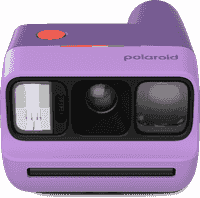 Polaroid Go Generation 3$82.00 (list $89.99)Check price on Amazon
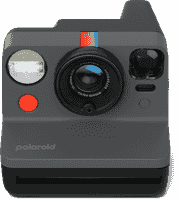 Polaroid Now Generation 3$129.99 (list $119.99)Check price on Amazon
Specs side by side
Same on both: Analog instant camera · Current · no close-up mode · self timer · double exposure · no bulb mode · Power: built-in lithium-ion battery, USB-C rechargeable · Shots per battery / prints per charge: 120.
| Spec | Polaroid Go Generation 3 | Polaroid Now Generation 3 |
|---|---|---|
| Launched | 2026 | 2025 |
| Film or media | Polaroid Go | Polaroid i-Type (also takes Polaroid 600) |
| Print size | 66.6 x 53.9 mm | 107 x 88 mm |
| Image size | 47 x 46 mm | 79 x 77 mm |
| Film cost per shot | $1.36 | $2.37 |
| Lens | 63.75 mm polycarbonate resin fixed-focus lens (about 42 mm equivalent), up from 51.1 mm on the Gen 2 | Coated optical-grade polycarbonate and acrylic two-lens system; focal lengths not published for Generation 3 |
| Focus | fixed focus; no autofocus, parallax error at close distances | autofocus that picks between 2 fixed focus zones: 0.40 to 1.3 m and 1.0 m to infinity |
| Exposure | automatic; apertures f/14.4 and f/32, selected by the camera | automatic; Polaroid lists six usable apertures from f/64 to f/11. Polaroid support documents a three-position exposure compensation (brighten, neutral, darken) reached by holding the flash button on the Now line, though PCMag's reviewer treated the Gen 3 as having no on-body exposure control |
| Shutter | 1/500 to 1 s | custom shutter system driven by a precision step motor; Amazon's spec sheet lists a 10 s maximum exposure. Polaroid does not publish the full speed range |
| Flash | built-in vacuum discharge tube flash, stronger than the Gen 2; can be switched off with the flash button but defaults back on for every shot | built-in flash, fires automatically, can be switched off with the flash button |
| Selfie mirror | Yes | No |
| Tripod socket | No | Yes |
| App | Polaroid app for Scan & Share only; no Bluetooth camera control or remote trigger | Polaroid app for Scan & Share only; the Now Gen 3 has no Bluetooth and no app camera control |
| Dimensions | 106.5 x 83.8 x 64.6 mm | 150.2 x 112.2 x 94 mm |
| Weight | 252 g | 448 g |
| Colours | 5 (White, Black, Teal Blue, plus 2 more) | 7 (Black, Pebble White, Arctic Blue, plus 4 more) |
| Street price | $82.00 (checked October 5, 2026) | $129.99 (checked October 5, 2026) |
| Amazon rating | 3.8 (224 ratings) | 4.3 (540 ratings) |
| Buy | Check price on Amazon | Check price on Amazon |
Specs from manufacturer pages; prices and ratings checked October 5, 2026.
What reviewers and buyers say
Polaroid Go Generation 3
Published reviews of the Polaroid Go Generation 3:
- “The palm-sized Go Gen 3 is the smallest instant camera yet and bags of fun to shoot with, and the cheaper film makes it far more enjoyable to experiment with than the larger Polaroids, but watch yourself in bright sunlight because it is easy for images to be overexposed to near-oblivion.” (TechRadar (Jon Stapley), 2026-06)
- “Artaius calls it Polaroid's best miniature camera yet, giving the most consistent and highest-quality results of any Go thanks to the longer lens and improved exposure.” (Digital Camera World (James Artaius), 2026-07)
- “The Polaroid Go Generation 3 is a sensible update to what was already one of the most charming instant cameras around, staying focused on being small, approachable and easy to bring along.” (Keith Wee, 2026-06)
Amazon buyers rate it 3.8 out of 5 across 224 ratings.
Praised for: genuinely pocket-sized, Go film is much cheaper per shot than i-Type, selfie mirror and stronger flash make selfies work, simple enough for a child to use. Criticised for: prints blow out in bright sunlight, flash turns itself back on for every shot, no tripod thread despite having a self-timer, tiny image area.
Polaroid Now Generation 3
Published reviews of the Polaroid Now Generation 3:
- “Reviewing the Gen 3 body (as the Now+), Finnen concludes that if you are an avid photographer you will reap far bigger rewards from a vintage Polaroid such as the Impulse AF, and that the third generation does not change that.” (Dan Finnen, 2025-04)
- “Fisher, who notes the Now Gen 3 is physically identical to the Now+ he tested apart from Bluetooth, calls it a stylish instant camera that wins nostalgia points for its classic square I-Type film format but whose basic autofocus misses too often to justify the cost per use.” (PCMag (Jim Fisher), 2025-06)
- “Reviewing the Gen 3 body in Now+ form, he says he has really enjoyed using it and finds it a lot of fun, while flagging the sealed internal battery and the ongoing film cost as the things to think about before buying.” (PhotographyBanzai, 2025-10)
Amazon buyers rate it 4.3 out of 5 across 540 ratings.
Praised for: simple point-and-shoot operation, the classic Polaroid look and full-size prints, solid build and good colour choices, no Bluetooth means no phone in the way. Criticised for: film cost, eight shots a pack, exposure and sharpness can disappoint indoors and in mixed light, expensive for what buyers call a novelty, viewfinder framing takes practice, the print shows more than you expect.
Frequently asked questions
What is the difference between the Polaroid Go and the Polaroid Now?
Film size, body size and price. The Go takes Polaroid Go film, which prints 66.6 x 53.9 mm with a 47 x 46 mm image. The Now takes i-Type film, and Polaroid 600, which prints 107 x 88 mm with a 79 x 77 mm image. The Go weighs 252 g and was $82 at the last check, the Now weighs 448 g and was $129.99. The Go has a selfie mirror and fixed focus. The Now has a tripod socket and autofocus that picks between two zones.
Do the Polaroid Go and Polaroid Now use the same film?
No, and the packs are not interchangeable. Go film fits only the Go. The Now takes Polaroid i-Type film and also takes Polaroid 600 film.
Which one is cheaper to run?
The Go, by about a dollar a shot. At the last check a Polaroid Go Color double pack of 16 shots was $21.79, which is about $1.36 a shot. A Polaroid Color i-Type single pack of 8 shots was $18.99, which is about $2.37 a shot.
Which is better for a beginner?
Both are point and shoot cameras with no manual modes, so neither asks anything of you. The Now is the safer first Polaroid: Amazon buyers rate it 4.3 out of 5 across 540 ratings against 3.8 out of 5 across 224 for the Go, and its listed strengths include being a first Polaroid and a gift. The Go is aimed at kids, travel and selfies, and it is the one that overexposes easily in strong sun.